
Best Materials for CNC Machining and How to Choose the Right One for Your Project
Material selection is one of the most important decisions in any machining project. The right material affects durability, machining speed, product performance, surface finish, and overall manufacturing cost. Different industries require different material properties depending on strength, weight, corrosion resistance, and precision requirements.
When working with a professional CNC machine shop, understanding which material is best for your application can help improve efficiency and reduce production issues. From lightweight aluminum to high-strength titanium, each material offers unique advantages for specific machining needs.
Why Material Selection Matters in CNC Machining
CNC machining involves cutting, drilling, milling, and shaping raw materials into finished components. Some materials are easier to machine, while others require specialized tooling and slower production speeds.
The right material choice can help manufacturers:
- Improve product performance
- Reduce machining time
- Lower production costs
- Increase durability
- Achieve better surface finishes
Professional machining providers often guide clients through the material selection process to ensure the best balance between performance and cost.
Aluminum for Lightweight and Fast Machining
Aluminum is one of the most commonly used materials in CNC manufacturing because it is lightweight, corrosion-resistant, and easy to machine.
Best Applications for Aluminum
- Automotive parts
- Aerospace components
- Consumer electronics
- Prototype manufacturing
- Custom enclosures
Benefits of Aluminum Machining
- Faster machining speeds
- Lower manufacturing costs
- Excellent corrosion resistance
- Smooth surface finish
- Lightweight strength
Aluminum is ideal for projects that require precision without excessive material weight. It is also one of the best choices for rapid prototyping and high-volume production.
Stainless Steel for Strength and Durability
Stainless steel is widely used in industries where strength and corrosion resistance are critical. Although it is harder to machine than aluminum, it offers excellent durability and long-term reliability.
Best Applications for Stainless Steel
- Medical equipment
- Food processing machinery
- Industrial components
- Marine applications
- Structural parts
Benefits of Stainless Steel Machining
- High strength
- Excellent corrosion resistance
- Long product lifespan
- Heat resistance
- Strong wear resistance
Professional providers of cnc machining services often recommend stainless steel for demanding environments where components must withstand pressure, moisture, or extreme temperatures.
Brass for Precision and Smooth Finishing
Brass is known for its excellent machinability and attractive surface appearance. It is easier to cut than many metals and produces highly accurate parts with smooth finishes.
Best Applications for Brass
- Electrical components
- Decorative hardware
- Plumbing fittings
- Precision connectors
- Low-friction parts
Benefits of Brass Machining
- Excellent machinability
- High dimensional accuracy
- Corrosion resistance
- Attractive appearance
- Good electrical conductivity
Brass is often selected for projects requiring fine detailing and precise tolerances.
Titanium for High-Performance Industries
Titanium is a premium material used in industries where strength, low weight, and corrosion resistance are essential. While titanium is more difficult and expensive to machine, it delivers exceptional performance.
Best Applications for Titanium
- Aerospace components
- Medical implants
- Defense equipment
- High-performance automotive parts
Benefits of Titanium Machining
- Extremely high strength-to-weight ratio
- Corrosion resistance
- Heat resistance
- Biocompatibility
- Long-term durability
Titanium machining requires advanced tooling and experienced operators, making it important to work with a skilled machining provider.
Plastic Materials for Cost-Effective Production
Engineering plastics are widely used in CNC machining for lightweight and low-cost applications. Common machining plastics include Delrin, Nylon, PTFE, and ABS.
Best Applications for Plastic Machining
- Prototype parts
- Insulators
- Consumer products
- Medical devices
- Lightweight components
Benefits of Plastic Machining
- Lower material cost
- Lightweight performance
- Fast machining
- Chemical resistance
- Electrical insulation properties
Plastic machining is often preferred for non-structural applications where metal strength is not required.
Factors to Consider Before Choosing a Material
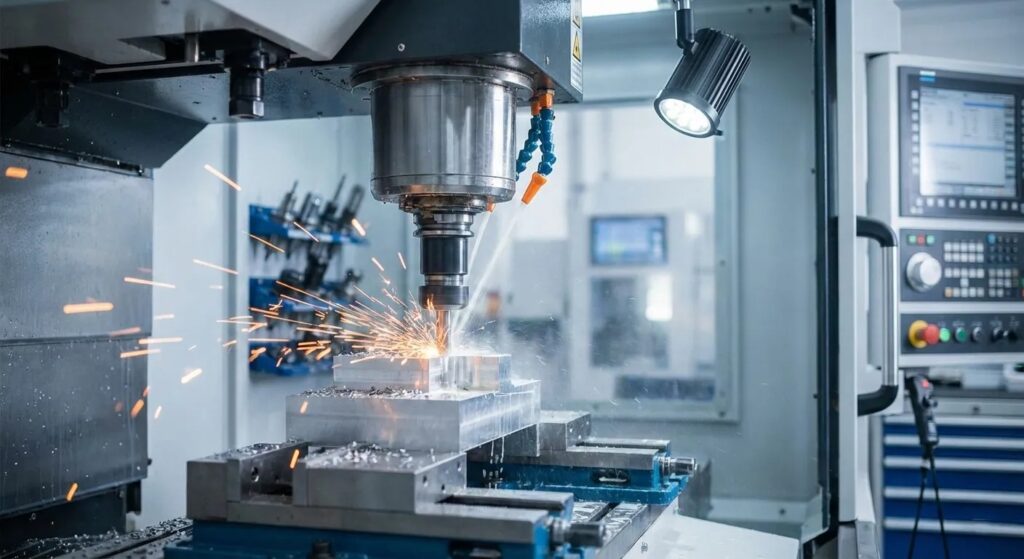
Selecting the right material depends on several project requirements.
Strength Requirements
Heavy-duty applications may require stainless steel or titanium, while lightweight designs often use aluminum or plastics.
Environmental Conditions
Projects exposed to moisture, chemicals, or heat need corrosion-resistant materials.
Machining Cost
Some materials machine faster and require less tooling, reducing production expenses.
Surface Finish Needs
Brass and aluminum often provide smoother finishes compared to harder metals.
Production Volume
High-volume manufacturing may favor materials that support faster machining speeds.
Shops like ER Machining help manufacturers evaluate these factors to select materials that match both technical and budget requirements.
The Importance of Working with an Experienced CNC Partner
Not every material behaves the same during machining. Experienced machinists understand cutting speeds, tooling requirements, heat management, and finishing techniques for different materials.
A knowledgeable machining provider can help businesses:
- Avoid production issues
- Improve part performance
- Reduce waste
- Optimize machining efficiency
- Maintain precision tolerances
For additional guidance on manufacturing materials and machining standards, organizations like ASM International provide valuable industry resources and technical insights.
Final Thoughts
Choosing the right material is essential for successful CNC manufacturing. Aluminum offers lightweight efficiency, stainless steel provides durability, brass supports precision finishing, titanium delivers high-performance strength, and plastics reduce production costs for lightweight applications.
Partnering with an experienced CNC machine shop ensures the right material is selected for your project’s performance, budget, and production goals. With proper material selection and expert machining support, manufacturers can achieve better quality, improved efficiency, and long-term production success.